Grams to Cups Tools for Easier Cooking & Baking
Welcome to Grams to Cups Tools, a thoughtfully organized home for kitchen measurement converters, ingredient-specific guides, and practical cooking reference charts. Find the right conversion page, understand what affects the answer, and return to your recipe with confidence.
Recipes from different countries may use grams, cups, ounces, milliliters, or a mixture of measurements. Our website connects those everyday questions to dedicated conversion tools and clear ingredient guides. Whether you are measuring flour for bread, sugar for cookies, butter for frosting, or rice for dinner, start here and choose the resource that matches your task.
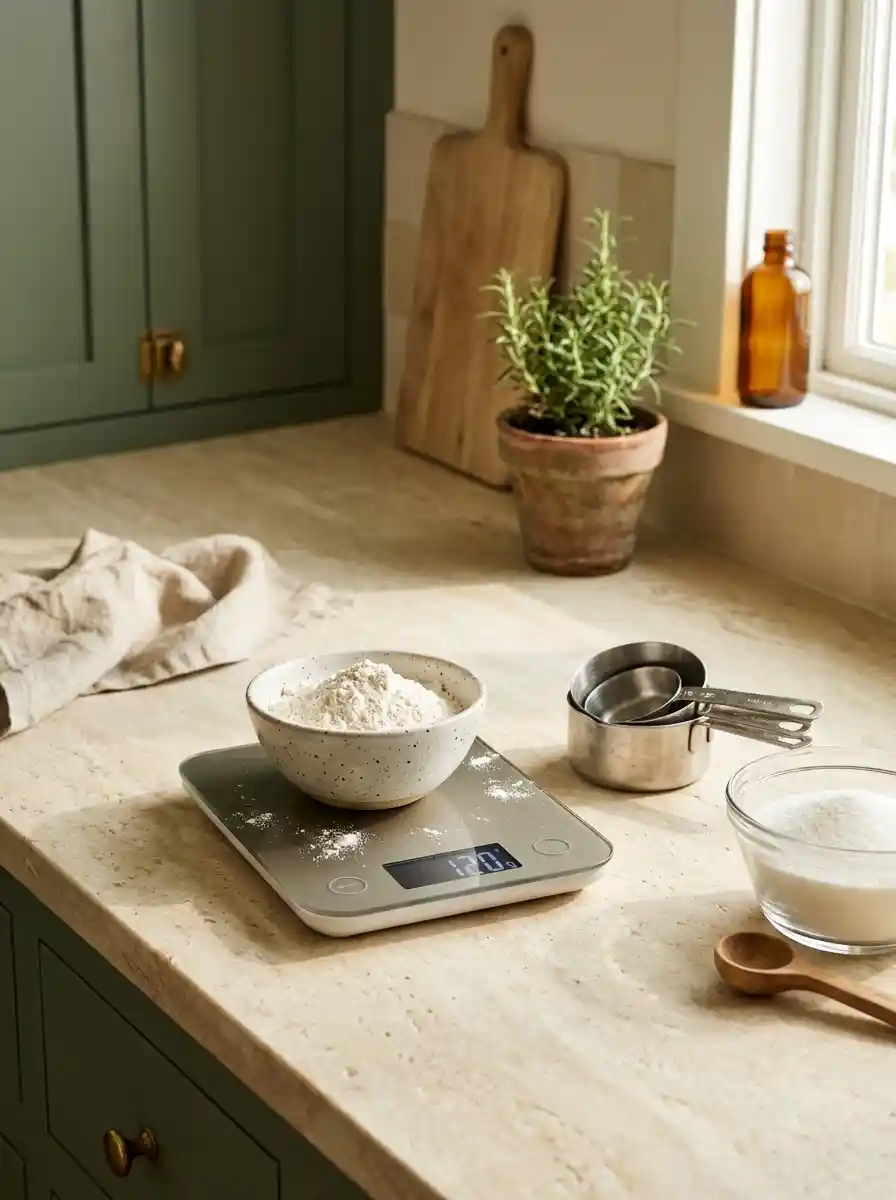
Choose Your Kitchen Conversion Direction
The homepage is your navigation hub. Actual calculations happen on our two dedicated converter pages, which use the same easy-to-use calculator with different starting directions. Both pages help you choose an ingredient and understand the result.
Grams to Cups Converter
Have an amount in grams but need cups? Open the grams to cups tool, enter the weight, choose the ingredient, and see its approximate cup equivalent. Useful for following a recipe written in metric measurements when you use measuring cups at home.
Open grams to cups →Cups to Grams Converter
Have a recipe written in cups but prefer a kitchen scale? Open the cups to grams tool, select the ingredient and cup size, and convert a volume into an estimated gram weight. This is especially useful when you want to repeat a baking recipe consistently.
Open cups to grams →A gram measures mass and a cup measures volume, so the ingredient matters. These tools are intended for kitchen reference rather than laboratory-grade measurement.
Browse Kitchen Conversion Categories
From everyday quantity questions to ingredient-specific baking measurements, the categories below help you find more focused information. Explore gram amounts, cup amounts, conversion charts, and food groups to locate the most relevant guide. Each card takes you toward a related group of articles rather than crowding the homepage with every conversion.
General Conversion Resources
Ingredient Conversion Categories
No category matches that search. Try a broader term such as “baking,” “cups,” or “ingredients.”
Why Grams and Cups Aren’t Always Interchangeable
Before using any grams to cups converter, it helps to understand what the two units actually describe. A gram (g) is a metric unit of mass. A cup is a unit of volume used in many recipes. Mass tells you how much matter an ingredient contains; volume tells you how much space the ingredient occupies. Because these are different properties, there is no single cup conversion that works for every food.
Consider two common baking ingredients: all-purpose flour and granulated sugar. Fill two identical cups to the same level and the weights will usually differ. Flour has more air between its particles when measured loosely, while sugar granules settle differently. Butter, honey, milk, and chopped vegetables behave differently again. As a result, a generic calculator that ignores the ingredient may give misleading answers.
Our conversion approach is ingredient-aware. The two main tool pages let you choose the item being measured, so the conversion can use an appropriate grams-per-cup reference value. Treat a result as a useful kitchen estimate, and follow the specific recipe author’s measurements whenever they are available. A food scale is the best choice when repeatable precision matters, especially for sensitive baked goods.
- Know whether your starting value is a weight or a volume.
- Choose the exact ingredient and preparation form where possible.
- Check whether the recipe uses US or metric cups.
- Use a scale for recipes that specify a gram amount.
Want a quick calculation instead of a lesson? Go straight to our grams to cups converter.
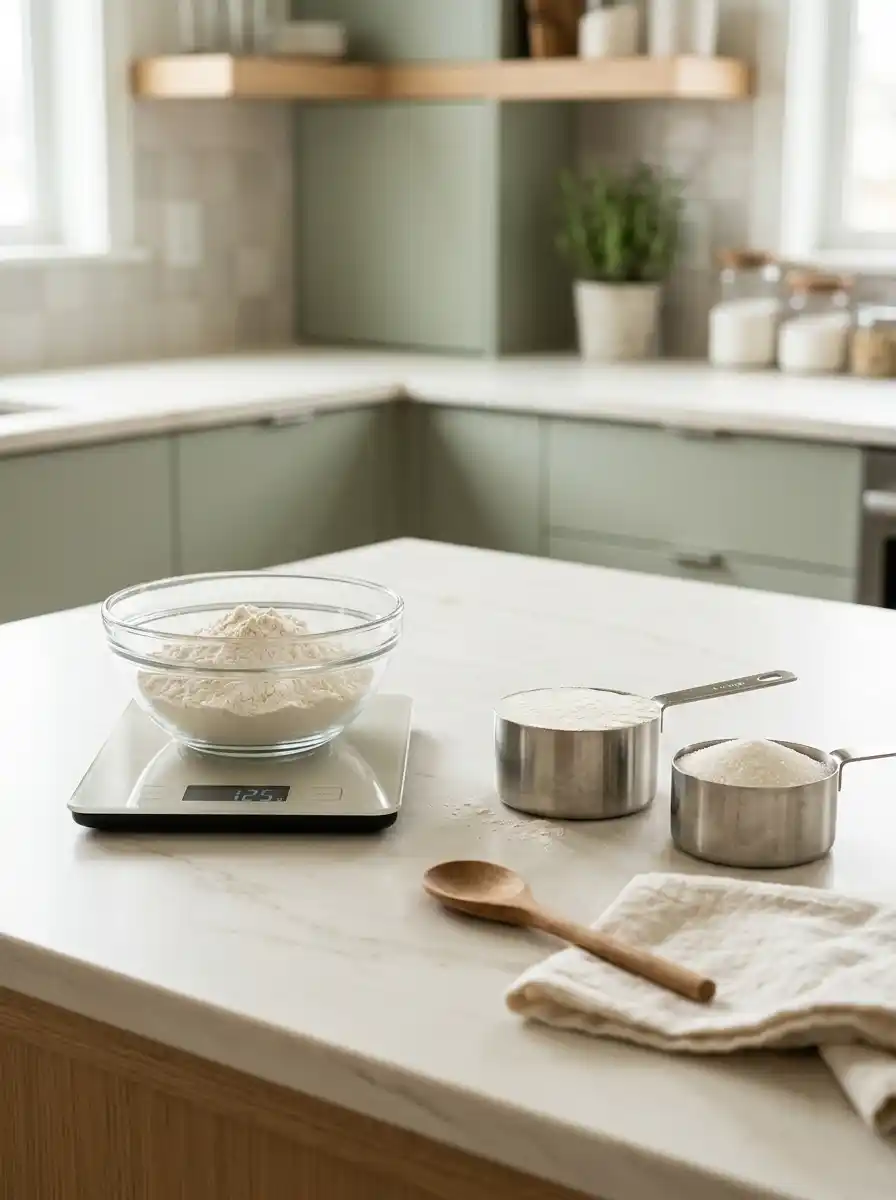
What Changes a Kitchen Conversion Result?
Understanding a few simple variables can make recipe measurements easier to interpret and helps you decide when a conversion chart is sufficient or a kitchen scale is a better option.
Ingredient density
Air spaces, particle size, and composition affect how many grams fit into one cup. Flour, sugar, and honey should not share one conversion factor.
Cup standard
A US customary cup is approximately 236.6 mL, while a metric cup is 250 mL. Select the cup standard used by your recipe when the tool offers a choice.
Preparation method
Sifted or packed flour, chopped or whole nuts, and raw or cooked grains may have different weights for the same measured volume.
How does an ingredient-based conversion work?
The calculator uses an ingredient reference weight, often expressed as grams per selected cup. For grams to cups, divide the ingredient’s gram amount by its grams-per-cup value. For cups to grams, multiply the cup amount by that value. The reverse relationship is straightforward, but the ingredient reference is essential.
Example: If a particular flour reference specifies 120 g per US cup, then 60 g ÷ 120 g per cup = 0.5 US cup. With that same reference, 1.5 US cups × 120 g per cup = 180 g. These figures are illustrative; other brands and measuring methods may use different flour weights. This is why your result should show the selected ingredient and cup size rather than only a number.
For food-specific questions, a detailed article can add preparation notes, measurement caveats, and recipe context that a single tool result cannot explain. That is the purpose of our ingredient categories and conversion reference guides.
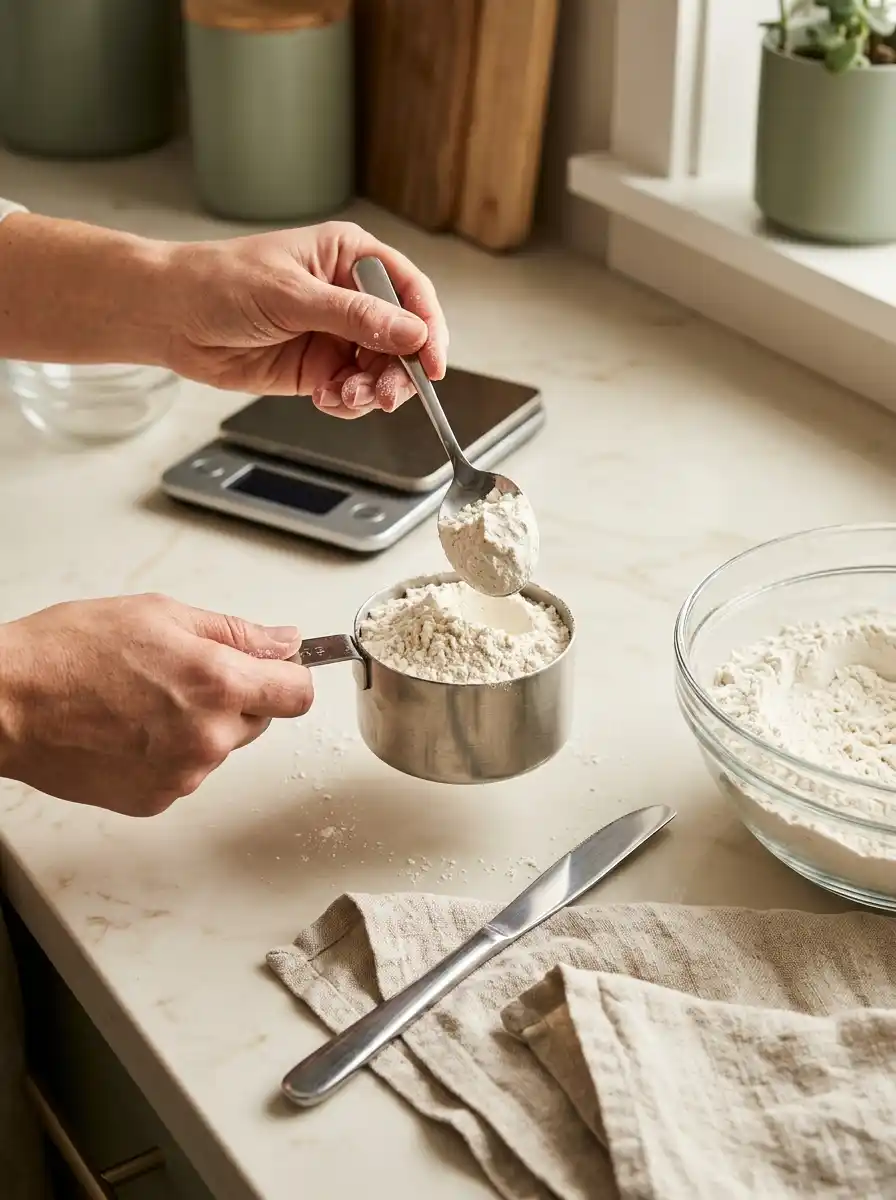
Practical Measurement Tips for Everyday Recipes
Kitchen conversions are helpful, but the way you measure an ingredient matters too. When measuring flour by volume, for example, spooning flour into a cup and leveling it can produce a different weight than dipping the cup directly into a tightly packed bag. Brown sugar is often measured packed, while powdered sugar may be measured sifted or unsifted depending on the recipe. If those instructions are not clear, a gram value supplied by the recipe author is generally the more dependable reference.
Liquids introduce another consideration. A clear liquid measuring jug is often easier to read at eye level than a dry measuring cup, especially when dealing with fractional cups. For small amounts, measuring spoons may be more practical. Recipe scales are useful for sticky ingredients such as honey, syrup, and nut butter because they reduce the mess from transferring the ingredient between containers.
Grains and pasta deserve special attention. A cup of uncooked rice should not be treated as equivalent to a cup of cooked rice, and the shapes of different dry pastas affect how closely they settle into a measuring cup. The same is true for sliced, grated, or chopped produce. Whenever the form is relevant, look for a conversion guide that names it clearly.
We organize these subjects into dedicated topic areas rather than forcing them into a universal table. Browse flour and baking mixes, rice, pasta and grains, or dairy, eggs and liquids to find advice for the ingredient you are using.
Find the Best Guide for Your Recipe Question
Not every search needs a calculator. Sometimes a quick amount guide, printable-style conversion chart, or detailed ingredient explanation will answer the question faster. Use these pathways to reach the most useful part of the website.
Common gram amounts
Searches like “100 grams to cups,” “150 grams to cups,” or “250 grams to cups” start with a specific amount but still need an ingredient to produce a reliable result. Our amount guides help put those quantities into context and direct you to the calculator when necessary.
Explore gram amount conversions →Common cup fractions
Half cups, quarter cups, and one-and-a-half cups are frequent recipe measurements. Moving from a fraction of a cup into grams can make weighing ingredients easier, especially when scaling a recipe or following baking instructions from another country.
Explore cup amount conversions →Baking ingredients and mixes
Cakes, bread, muffins, cookies, and pastry recipes use ingredients with different measuring requirements. Detailed baking content helps distinguish flour types, cocoa powder, sugar styles, butter, leaveners, and mixed or prepared dough.
Browse baking guides →Charts, methods, and tools
Reference charts are convenient when you need to check multiple ingredients. Explanatory articles are useful when measurement conventions, the selected cup standard, or an ingredient preparation method changes how a conversion should be interpreted.
Browse conversion charts →How to Use Grams to Cups Tools
You can begin with an amount, an ingredient, or the measurement direction you need. The website is built to make that choice clear before you spend time reading an unrelated article.
Select a direction
Open grams to cups if your recipe starts with grams, or cups to grams if your recipe begins with cup measurements. Both dedicated pages provide the calculator experience.
Choose an ingredient
Enter the amount and pick the closest ingredient and preparation form. Check the cup standard and read any assumptions shown with the result.
Explore deeper guides
Follow the relevant category or reference guide for more background, measurement techniques, alternative ingredients, and common quantities.
Our goal is not to replace good recipe instructions. It is to help bridge different measuring systems and remove unnecessary guesswork. Some people prefer traditional measuring cups, others weigh every ingredient, and many home cooks use both. A well-organized conversion hub should support all of those habits without treating mass and volume as if they were identical.
If a recipe gives both grams and cups, prioritize the measurement specified by the author as most reliable. If you are converting an unfamiliar ingredient or a specially prepared mixture, check whether the reference weight reflects its form. For precision-critical recipes, weighing in grams is often the more consistent approach.
Frequently Asked Questions
These answers explain how to use the site and clarify some of the most common misunderstandings about kitchen weight and volume measurements.
What is Grams to Cups Tools?
Grams to Cups Tools is a kitchen conversion resource that connects two dedicated calculator pages with ingredient guides, amount-based articles, and reference charts. The homepage is a branded hub for finding the most relevant resource, rather than a separate calculator.
Where can I convert grams to cups?
Open our grams to cups converter. Enter the gram amount, select the ingredient, and review the result and any available measurement notes.
Can I convert cups back into grams?
Yes. Use our dedicated cups to grams converter, which begins with the reverse conversion direction. Both main tools use the same calculator system.
Why can’t every ingredient use the same grams-to-cups formula?
A cup measures volume while a gram measures mass. Ingredients have different densities, packing properties, and moisture contents, so the weight of one cup changes with the ingredient and sometimes with the preparation method.
What is the difference between US and metric cups?
A US customary cup is approximately 236.6 milliliters and a metric cup is 250 milliliters. They are not exactly the same volume. Check your recipe’s measuring convention, especially when following international baking instructions.
Are grams or cups better for baking?
Using a scale and grams is often more repeatable, especially for flour and other ingredients affected by scooping or packing. Cups remain convenient for everyday cooking, and our tools help you move between the two methods.
Can I find conversions for flour, butter, rice, and sugar?
Yes. Browse our ingredient category directory for flour, sugar, fats, dairy, rice, grains, baking staples, nuts, produce, and other food ingredients. The specific calculator result also depends on the chosen ingredient reference.
Does a conversion chart replace ingredient-specific guidance?
Not always. A chart can be a useful starting reference, but ingredients with different forms or preparation methods may need a more specific guide. For exact recipe results, use the original recipe’s weight when provided.
Find the Right Conversion, Faster.
Start with either of our main converters or explore the ingredient and amount categories above. Grams to Cups Tools brings cooking measurement references into one clear, easy-to-navigate home.